
Trauma-informed and trauma-responsive training
Training that recognizes what your learners may be carrying, and is built so they can actually learn. Here’s what these terms mean and how I build them into custom eLearning for your organization.
What is trauma-informed training?
People use “trauma-informed training” in two ways, and I build both.
Training about trauma
Courses that help staff understand trauma and chronic stress and respond with care, such as trauma-informed care training for frontline teams or courses on secondary traumatic stress and staff wellbeing.
Training designed with trauma in mind
Any course, on any topic, built so learners who have been through hard things can stay engaged and learn.
Your subject-matter experts bring the clinical and program knowledge. I turn it into custom trauma-informed online courses: clear, accessible and self-paced, so learners can take them when and where they’re ready.
Trauma-informed vs. trauma-responsive
Trauma-informed
Understanding how trauma and chronic stress affect people, including how they focus, remember and feel safe.
Trauma-responsive
Acting on that understanding in every design choice, from the first screen to the last quiz question.
My courses aim for both.
What trauma-responsive training looks like in a course
These design choices are part of every course I build.
- Content notes before hard topics, with a way to skip or come back later.
- A pace learners set, with no timers and no rushing.
- Choices that give learners control over what they explore and when.
- Grounding and self-regulation breaks built into the course.
- Real-world scenarios without real-world pressure, and no shock tactics or graphic content.
- A calm, predictable layout so learners always know where they are.
- Plain language, audio and visuals matched to your learners’ reading level.
- Built to WCAG 2.1 AA, with captions, screen reader support and keyboard navigation.
Who trauma-informed eLearning is for
Organizations whose learners or staff may live with trauma or chronic stress.
Nonprofits and social services
Housing, family services, victim services, workforce development and reentry programs.
Health and behavioral health
Frontline staff training and learner-facing education.
Youth-serving organizations
Schools, camps and after-school programs training staff who work with young people.
Agencies and L&D teams
Public-sector and workplace training on sensitive topics such as safeguarding and crisis response.
Trauma-informed courses I’ve built
Both open as real courses you can try as a learner.
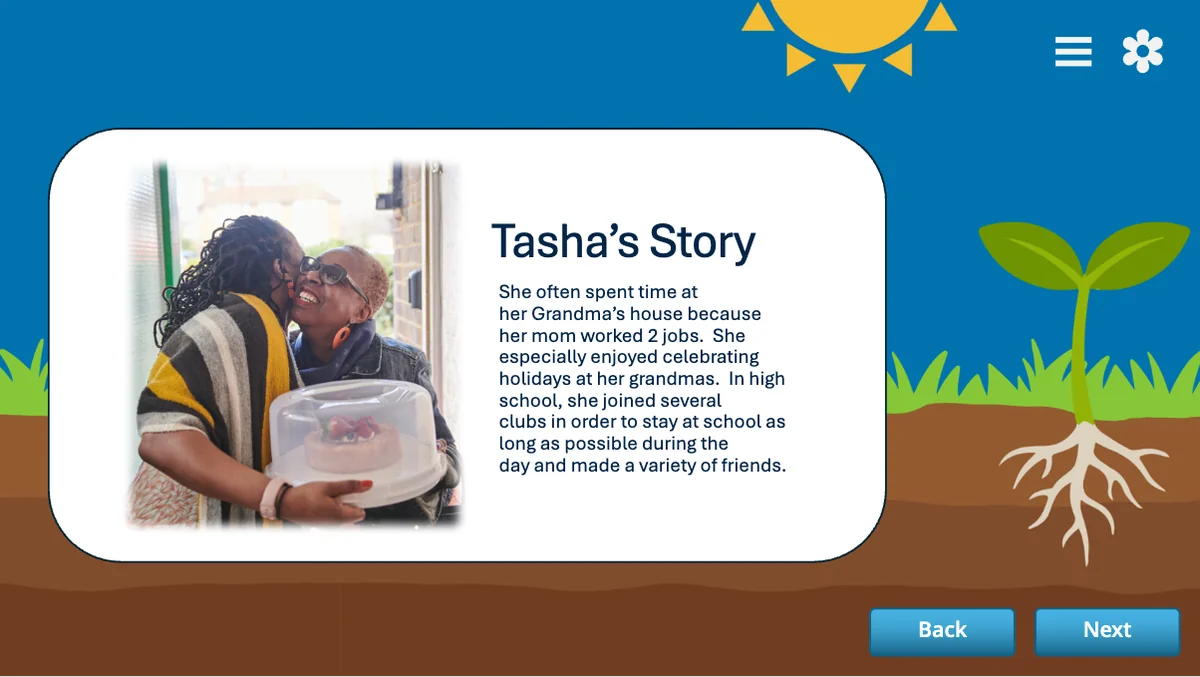
Trauma Defined
A self-paced introduction to trauma for adult learners, with captions, audio for all text and self-regulation breaks.
See this course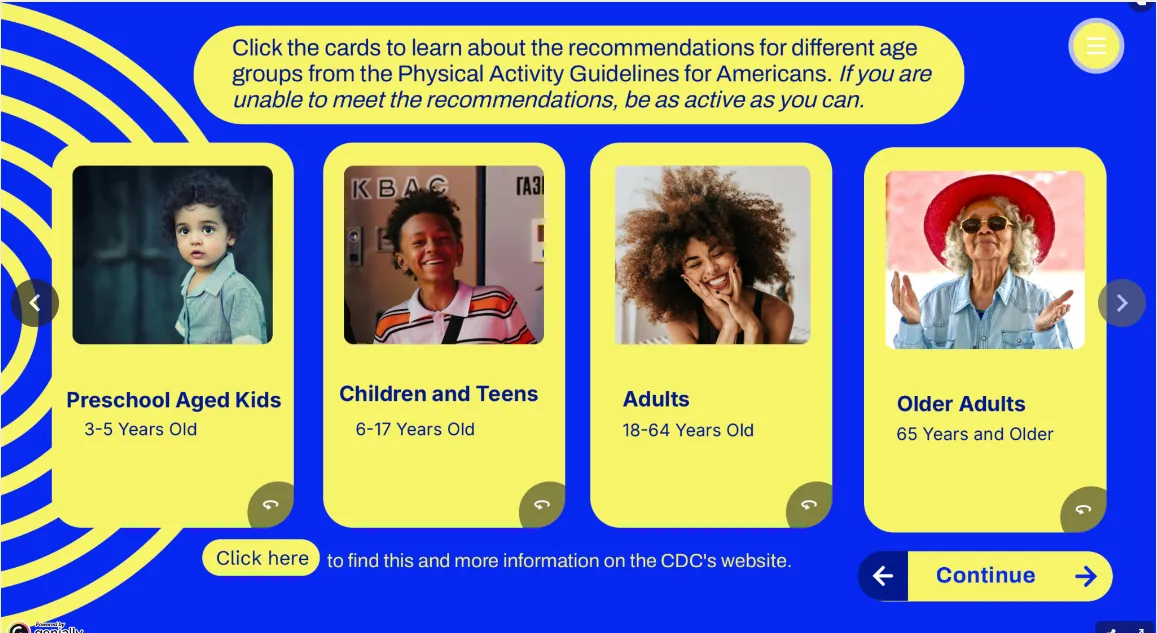
Health and Wellness
Story-based scenarios so families rebuilding after homelessness can practice everyday choices without real-world pressure.
See this courseLet’s talk about your learners
Tell me who you train and what they need. We’ll figure out the right next step together.
Book a free discovery callFree 30-minute call. Pick a time that works for you.